













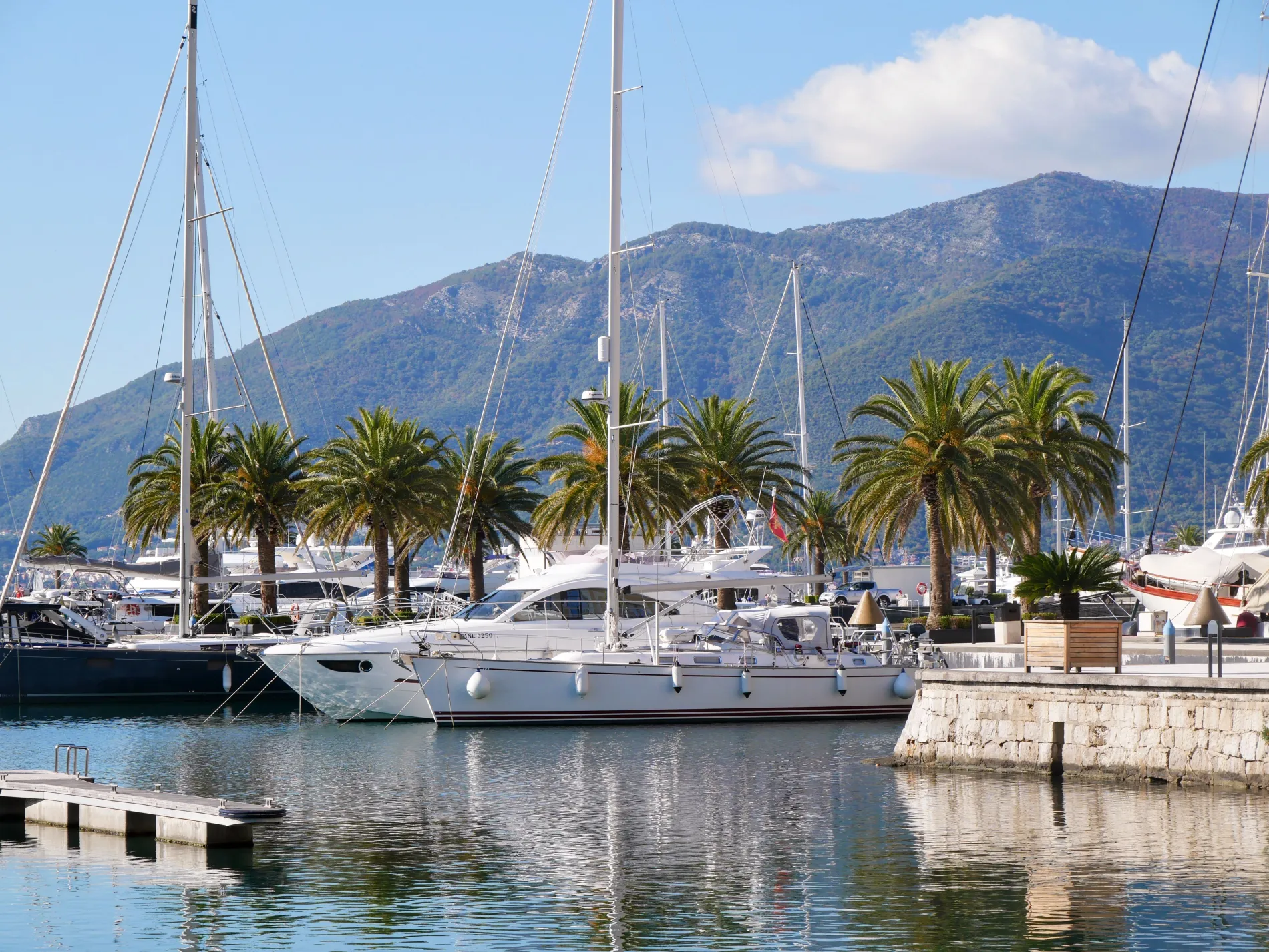
As customs scrutiny increases and cruising patterns evolve, yacht owners are rethinking where, when and how they manage Temporary Admission (TA). Porto Montenegro offers a timely new and alternative solution.
For many non-EU yacht owners, Temporary Admission has traditionally been managed through a familiar rhythm: enter the European Union for the Mediterranean season, exit before the relevant deadline, and use nearby non-EU jurisdictions such as Turkey or North Africa to reset, pause or reposition before returning.
That strategy has not disappeared, it remains part of the operational toolkit, however it is no longer the whole story. As owners’ lives become more international, and as customs authorities take a more detailed interest in residence, establishment and yacht use, Temporary Admission planning is becoming less about simple geography and more about evidence, timing and strategic decision-making.
This is where Montenegro, and particularly Porto Montenegro, has become increasingly relevant. Positioned just outside the EU customs territory, with established superyacht infrastructure, customs and immigration services, duty-free fuel and year-round marina support already exist, it offers more than a convenient Adriatic stop.
Historically, a non-EU port call was often viewed almost exclusively as a way to manage the clock, with Turkey and North Africa long providing an important non-EU option for yachts operating in the Mediterranean. However, the Adriatic is now playing a larger role in the conversation. For owners cruising between Italy, Croatia, Greece and the wider Eastern Mediterranean, Montenegro can offer a practical bridge between EU and non-EU waters without requiring a fundamental change to the guest experience or seasonal itinerary.
Porto Montenegro combines destination appeal with technical functionality, offering a more convenient and enjoyable approach to Temporary Admission. Rather than treating exit points as last-minute compliance fixes, owners and advisers can build them into the cruising calendar from the outset. A planned Montenegro call can support fuel, maintenance, crew logistics, guest turnaround or a natural transition between cruising areas, while also forming part of a clearer customs narrative.
For many non-EU yacht owners, Temporary Admission has traditionally been managed through a familiar rhythm: enter the European Union for the Mediterranean season, exit before the relevant deadline, and use nearby non-EU jurisdictions such as Turkey or North Africa to reset, pause or reposition before returning.
That strategy has not disappeared, it remains part of the operational toolkit, however it is no longer the whole story. As owners’ lives become more international, and as customs authorities take a more detailed interest in residence, establishment and yacht use, Temporary Admission planning is becoming less about simple geography and more about evidence, timing and strategic decision-making.
This is where Montenegro, and particularly Porto Montenegro, has become increasingly relevant. Positioned just outside the EU customs territory, with established superyacht infrastructure, customs and immigration services, duty-free fuel and year-round marina support already exist, it offers more than a convenient Adriatic stop.
Historically, a non-EU port call was often viewed almost exclusively as a way to manage the clock, with Turkey and North Africa long providing an important non-EU option for yachts operating in the Mediterranean. However, the Adriatic is now playing a larger role in the conversation. For owners cruising between Italy, Croatia, Greece and the wider Eastern Mediterranean, Montenegro can offer a practical bridge between EU and non-EU waters without requiring a fundamental change to the guest experience or seasonal itinerary.
Porto Montenegro combines destination appeal with technical functionality, offering a more convenient and enjoyable approach to Temporary Admission. Rather than treating exit points as last-minute compliance fixes, owners and advisers can build them into the cruising calendar from the outset. A planned Montenegro call can support fuel, maintenance, crew logistics, guest turnaround or a natural transition between cruising areas, while also forming part of a clearer customs narrative.
-
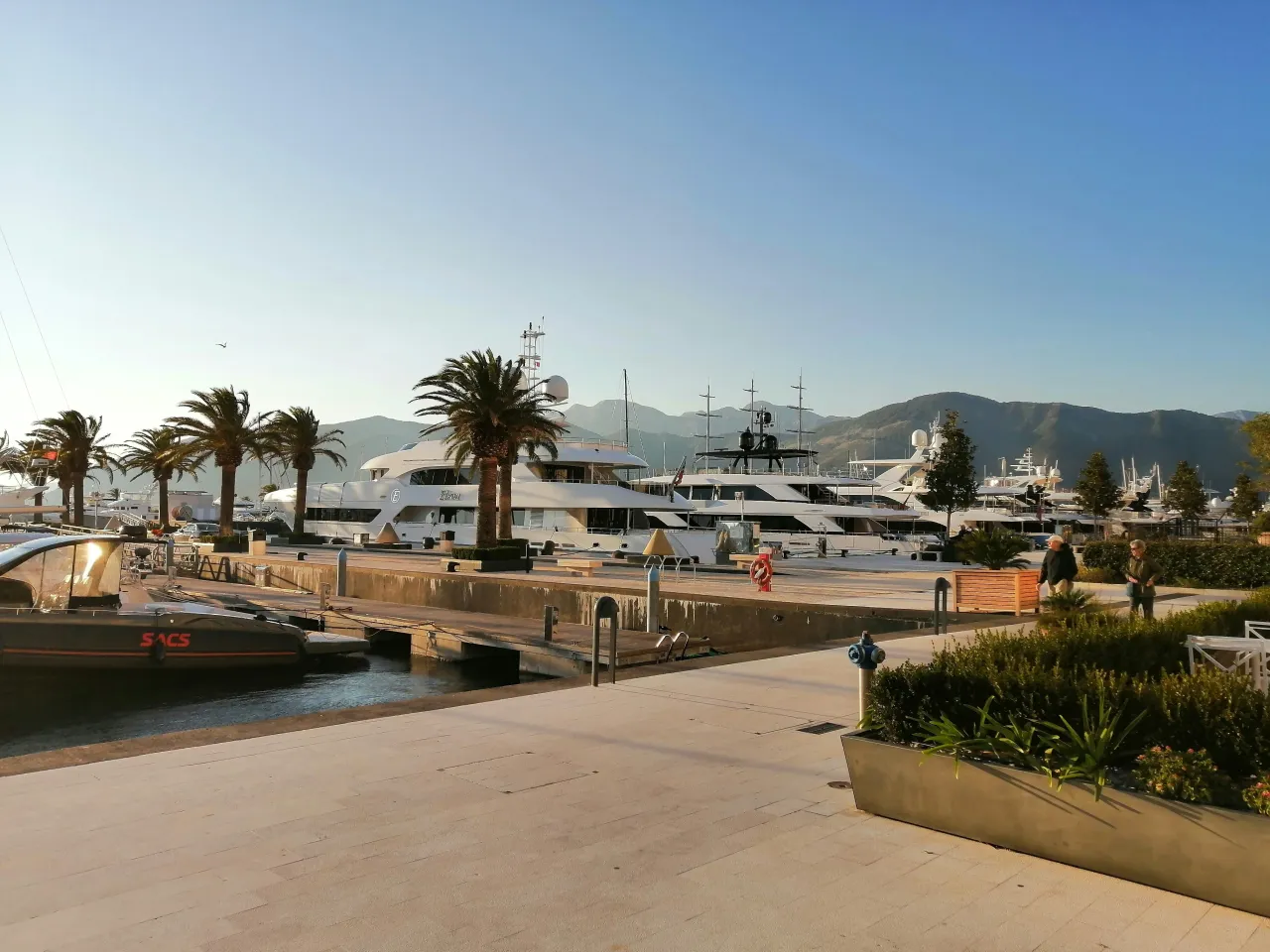
Porto Montenegro
That does not mean every yacht should adopt the same strategy. Temporary Admission remains fact specific. The owner’s establishment, the yacht’s registration, charter activity, private use and supporting records all need to be reviewed together. But this is an opportunity to move from reactive compliance to proactive planning. What Montenegro provides is not a universal answer, but an additional layer of flexibility for owners whose cruising patterns extend beyond a simple west-to-east Mediterranean season.
Camper & Nicholsons can assist yacht owners, family offices, captains and advisers around the world to align ownership structures, mobility planning and cruising programmes with today’s customs realities.
As the Temporary Admissions strategy continues to evolve beyond Turkey and North Africa, and as destinations such as Porto Montenegro play a growing role in Mediterranean planning, our team can help you review your cruising plans and ensure each movement is supported by a clear, documented customs narrative.
Camper & Nicholsons can assist yacht owners, family offices, captains and advisers around the world to align ownership structures, mobility planning and cruising programmes with today’s customs realities.
As the Temporary Admissions strategy continues to evolve beyond Turkey and North Africa, and as destinations such as Porto Montenegro play a growing role in Mediterranean planning, our team can help you review your cruising plans and ensure each movement is supported by a clear, documented customs narrative.
The information contained in this article is provided for general informational purposes only and does not constitute legal, tax, customs or regulatory advice. Appropriate professional advice should be sought based on individual circumstances.